Boiling Clouds
23/100

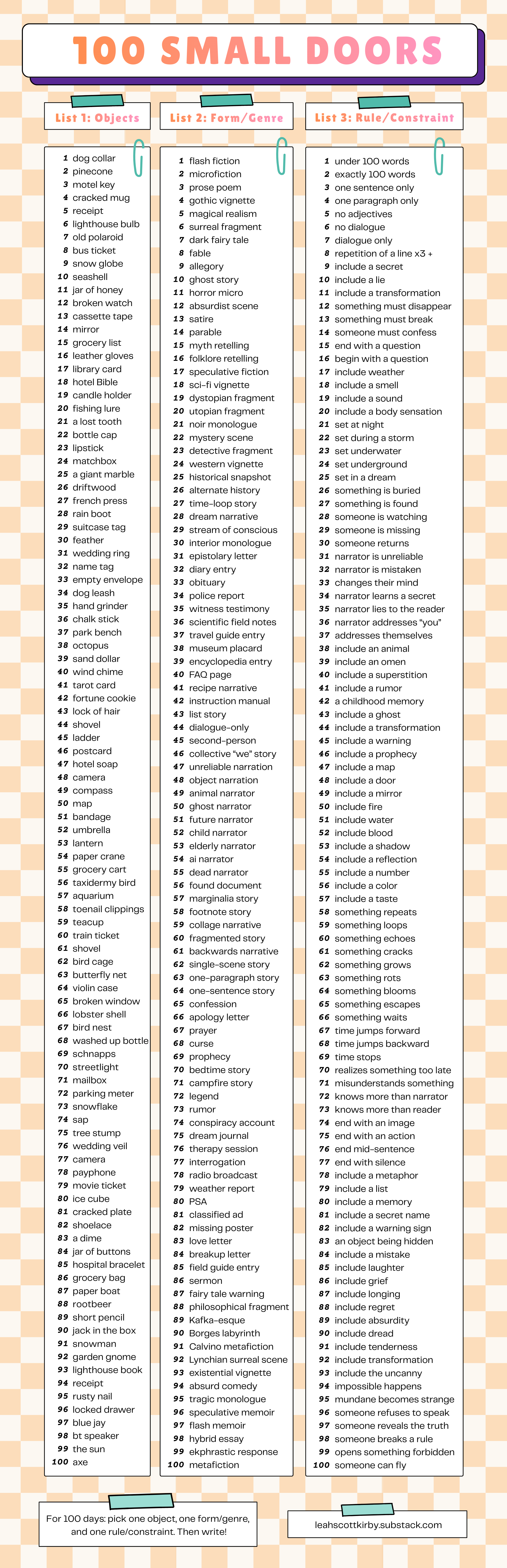
April 14th, 1957. A big one came through. The whole town hid indoors, pushing sandbags up against their doorways and around the sides of the barns. The animals were restless all night. Horses stomping in their stalls, cattle lowing in the dark. Mama locked us all in the bedroom, said she wanted to be able to see us, to have all seven o’ us accounted for.
But at four a.m., when I was sure everyone was asleep, even our dog Peanut, I snuck out of her room, down the stairs, through the living room, and out the front door into the yard. I skipped through puddles, soaking my bare feet, tickling between my toes, water shooting up at my ankles, and made my way through the muddy fields toward our storage shed.
It took every bit of effort I had to swing open the door against the wind, sucking and pushing like the sky itself was breathing.
I had maybe fifty boats I’d fashioned since the last storm.
I held the door open against the unpredictable gusts, their breath warm.
I’d made simple ones at first. Prototypes. Crafted with magazine clippings, construction paper I’d smuggled home in my backpack from school, those little golden clasps Pop used to keep his seed catalogs together. I kept changing their folds, sharpening their tips, tighter creases, lighter bodies.
Once I had the prototypes worked out, I started weaving the paper together. Double braiding, reinforcing. Those turned into wheat-woven sorts, stronger ones. And then, when no one was properly watching us kids, I’d sneak off to the metal shop and weld together a few lightweight ones out of tin, old aluminum cans, pieces of the barn roof that had fallen.
The next step would be making motors. Figuring out the remotes. Having full control of their course.
But for now, on this great storm of April 14th, 1957, I just needed to test how they float, how they move through the current. A mighty rush of water was coming down the center of our land, through the drainage ditch we’d dug last summer when the drought was killing us and we couldn’t get irrigation to the crops.
Weather was a silly, finicky thing I never understood. But I wanted to, desperately.
I pulled the paper ones down first and placed them in the bottom of a wheelbarrow. Then the sturdier ones, with the strongest on top. I yanked a tarp from the back of the shed and threw it over the pile.
Then I wheeled my fleet out toward the rushing drainage ditch, rain pelting my face as I bent over the tarp, shielding it from being snapped up and away.
The wind grew stronger the closer I got, but even that couldn’t stop me.
Just as I went to rip the tarp from my flock and set them sailing down the rapids, I heard Mama’s voice carried on the wind. Peanut barked alongside her.
The tarp tore itself from the heap, all on its own. And then the boats followed. Only they weren’t boats anymore.
They had become planes, lifting into the air, caught in a spiral that carried them up into a green sky, low and boiling with clouds.
Leah
If you’re new here, this is my personal 100-day writing challenge, in which I roll three 100-sided dice to determine:
an object
a writing style
a rule to write by.
Today, I rolled:
87 paper boat
51 future narrator
74 ends with an image